2Prof. Dr. Cemil Tascioglu City Hospital, Department of Psychiatry, Istanbul, Turkiye
3Istanbul Gelisim University, Faculty of Health Sciences, Department of Child Development, Istanbul, Turkiye
Abstract
Objective: This study examines the mediating role of experiential avoidance in the relationship between weight-related self-stigma and emotional eating among overweight and obese individuals.
Methods: The study included 200 overweight and obese individuals. Participants completed a questionnaire consisting of a sociodemographic information form, Emotional Eater Questionnaire (EEQ), the Weight Self-Stigma Questionnaire (WSSQ), and the Multidimensional Experiential Avoidance Questionnaire (MEAQ). The data obtained were analyzed using IBM SPSS and AMOS software packages.
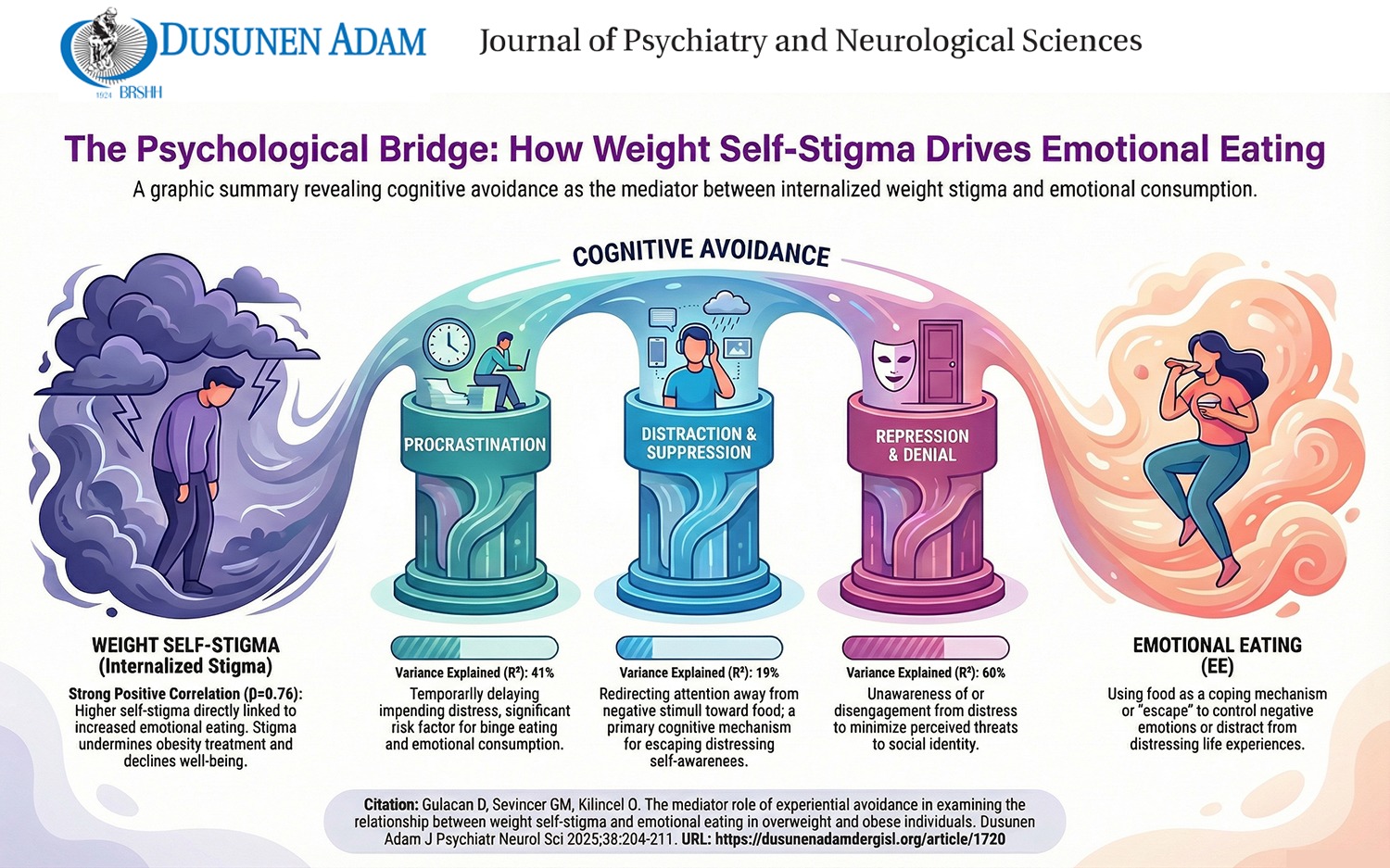
Results: The results indicated that higher levels of weight-related self-stigma were significantly associated with increased emotional eating. The procrastination, distraction/suppression, and repression/denial subdimensions of multidimensional experiential avoidance had a significant mediating effect in this relationship. However, no significant mediation effect was observed for the behavioral avoidance, distress aversion, and distress endurance subdimensions.
Conclusion: The findings indicate that emotional eating behavior increases as levels of weight-related self-stigma rise among individuals with overweight and obesity. In this relationship, cognitive dimensions of experiential avoidance play a more prominent role than behavioral components. Furthermore, no significant mediating effects were found for dimensions associated with long-term regulatory processes, such as distress aversion and distress tolerance, which may be more closely linked to broader aspects of psychological functioning. A multidimensional assessment of experiential avoidance may therefore support the development of more targeted and personalized interventions for individuals with overweight and obesity.
Graphical Abstract