2Gazi University, Neuroscience and Neurotechnology Center of Excellence (NOROM), Ankara, Turkiye
3Trakya University, Faculty of Health Sciences, Department of Physiotherapy and Rehabilitation, Edirne, Turkiye
4Bilkent University, Department of Neuroscience, Aysel Sabuncu Brain Research Center (ASBAM), Ankara, Turkiye
Abstract
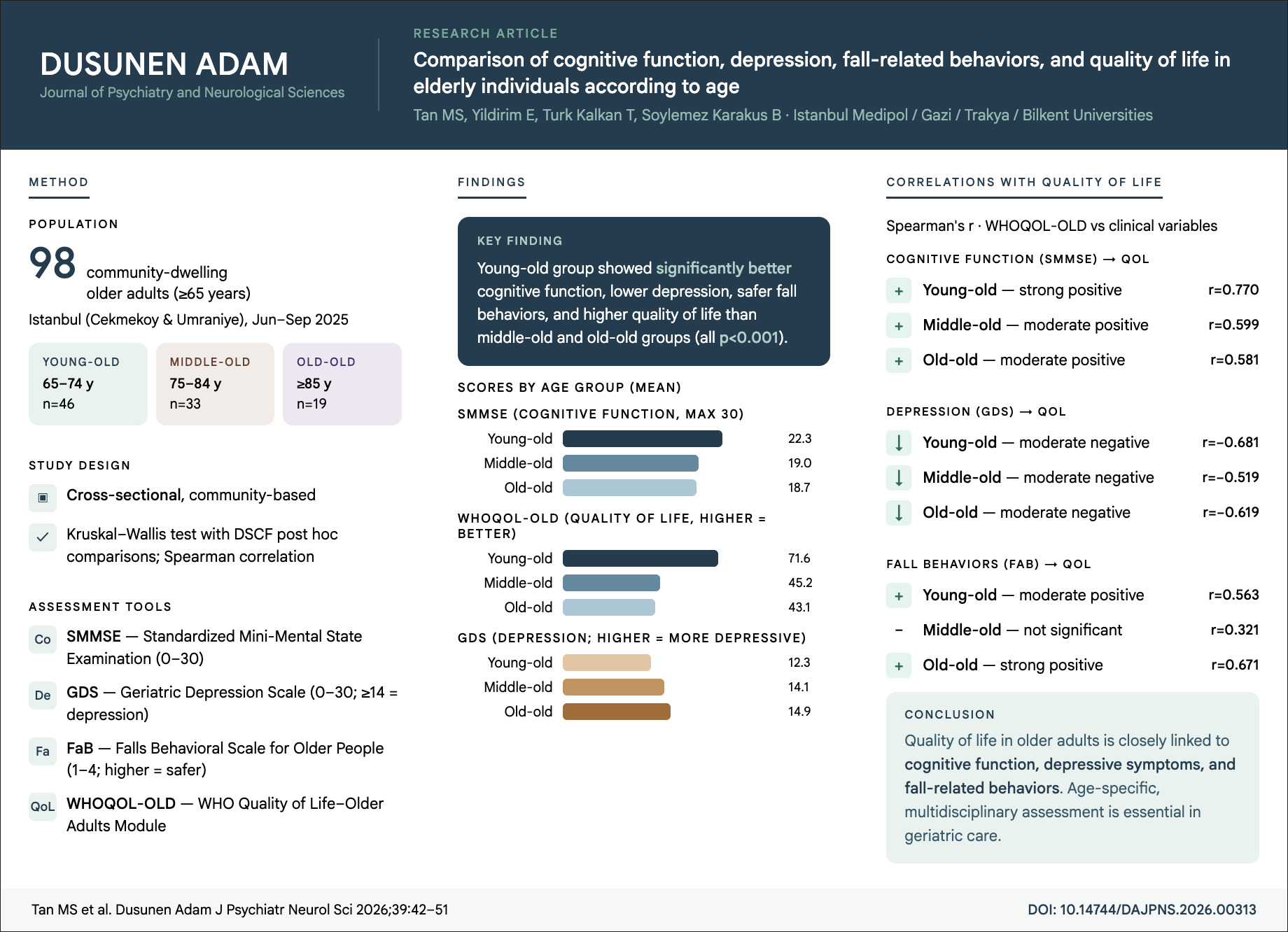
Objective: As the aging process progresses, individuals experience various changes in physical, cognitive, and psychological domains that can directly affect their quality of life. This study aimed to compare cognitive function, depressive symptoms, fall-related behaviors, and quality of life across different age groups and to examine their associations with quality of life in older adults.
Methods: A total of 98 community-dwelling older adults aged 65 years and older, living independently in two districts of Istanbul, were included in the study. Participants were classified into three age groups: young-old (65–74 years), middle-old (75–84 years), and old-old (85 years and older). Assessments included the Standardized Mini-Mental State Examination (SMMSE), the Geriatric Depression Scale, the Falls Behavioral Scale for Older People, and the World Health Organization Quality of Life–Older Adults Module (WHOQOL-OLD).
Results: The findings revealed that the young-old group had significantly better cognitive function, lower levels of depression, and higher quality of life scores compared to the other groups. Moreover, significant positive correlations were found between quality of life and cognitive function, while significant negative correlations were observed between quality of life and depression level across all age groups (p<0.05). Individuals who exhibited safer fall-related behaviors also demonstrated higher levels of quality of life (p<0.05).
Conclusion: These results suggest that quality of life in older adults is closely associated with cognitive, emotional, and behavioral factors, highlighting the importance of age-specific, multidisciplinary assessment approaches.
Graphical Abstract