2Istanbul Liv Hospital Vadi Istanbul, Department of Neurosurgery, Istanbul, Turkiye
Abstract
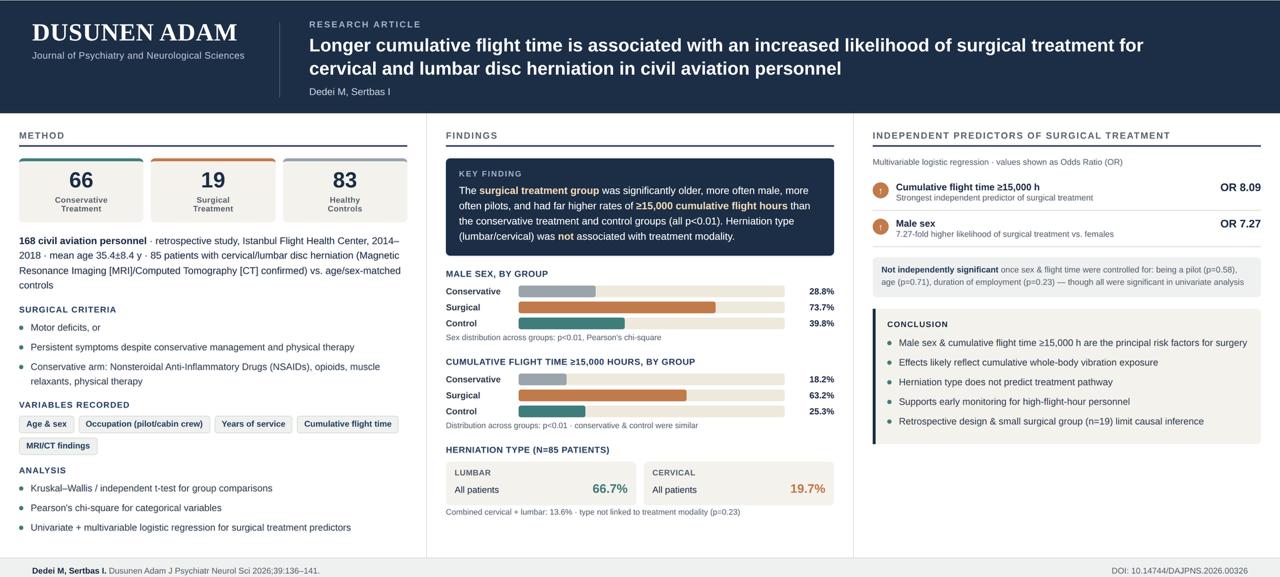
Objective: The aim of this study was to evaluate the occupational characteristics of civil aviation cabin crew and pilots who received medical or surgical treatment for lumbar or cervical disc herniation and to compare these characteristics with those of healthy controls, with a particular emphasis on age, sex, and cumulative flight time.
Methods: In this retrospective study, civil aviation cabin crew members and pilots presenting with low back and/or neck pain were compared with healthy controls matched for age and sex. Sociodemographic characteristics (age and sex), occupational characteristics (years of service, cumulative flight time, and type of flight duty), treatments modalities, and magnetic resonance imaging (MRI) findings were recorded and analyzed.
Results: The mean age of affected personnel was 42.37±10.3 years (pilots: n=8, cabin crew: n=11), with the highest proportion of cases occurring in the 40–55-year age group. Males accounted for 73.7% of the surgical treatment group compared with 28.8% of the non-surgical treatment group. The rate of surgical treatment was significantly higher among personnel with cumulative flight times exceeding 15,000 hours, particularly among male pilots. Regression analyses demonstrated that male sex, age greater than 45 years, and cumulative flight time exceeding 15,000 hours were independently associated with an increased likelihood of requiring surgical intervention.
Conclusion: Our findings indicate that male sex, advancing age (particularly >45 years), and longer cumulative flight time are the primary risk factors associated with surgical treatment for lumbar and cervical disc herniation among civil aviation personnel. These results highlight the importance of early monitoring and preventive strategies for individuals at increased risk.
Graphical Abstract